
[RE]MEMBERS

RE MEMBERS

A program transforming Ukrainian communities through universal design, collective action, and a new culture of responsibility.

RE
Remember · Rebuild · Return · Reconnect

Our goal is to turn the cracks in society into stronger bonds through collective action and equality.

Remember— to remember

Remember those who defend Ukraine and sacrifice what is most precious for our future.

MEMBERS — that’s us

Everyone who doesn’t watch from the sidelines but takes part in the change. Only collective action creates equal opportunities for all.

Plaza with ramps and steps in front of a Catholic church
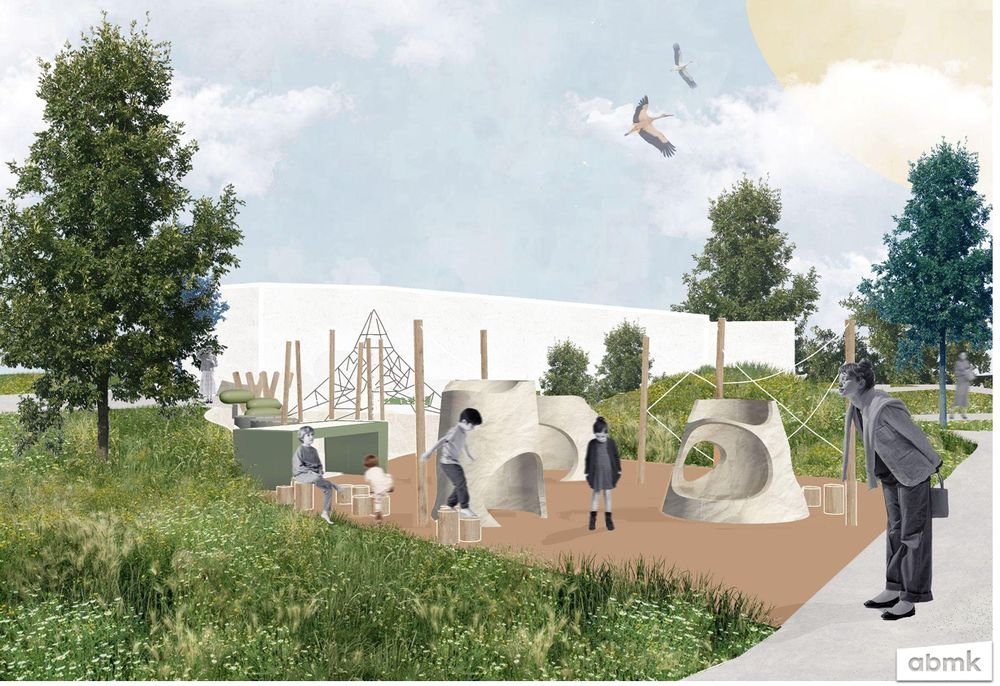
Playground with a rocket
Public restroom with a green roof
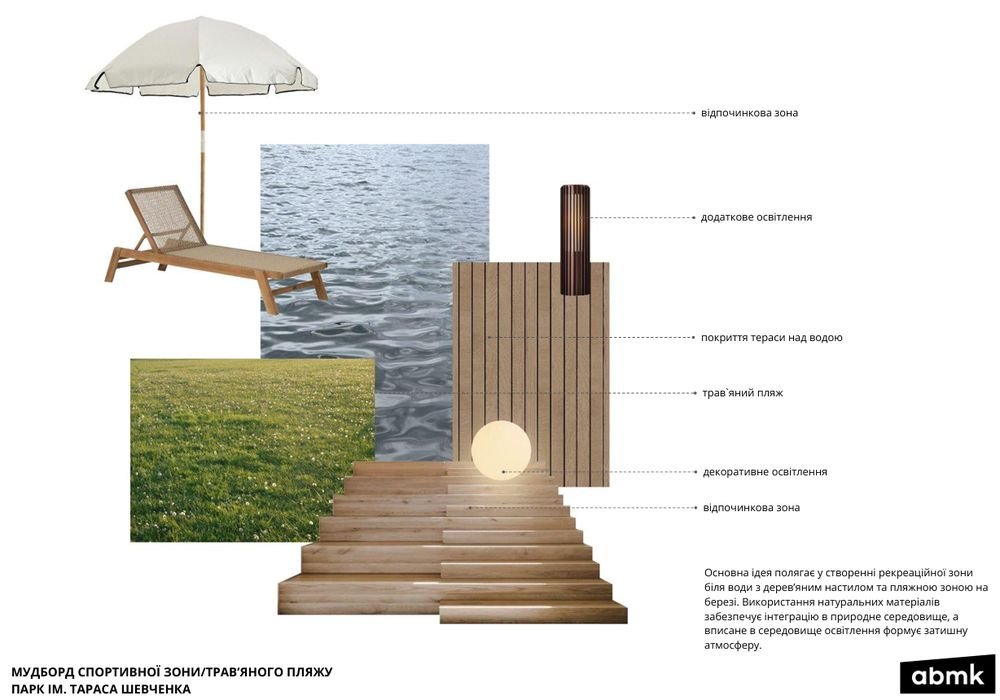
Wooden deck on the water
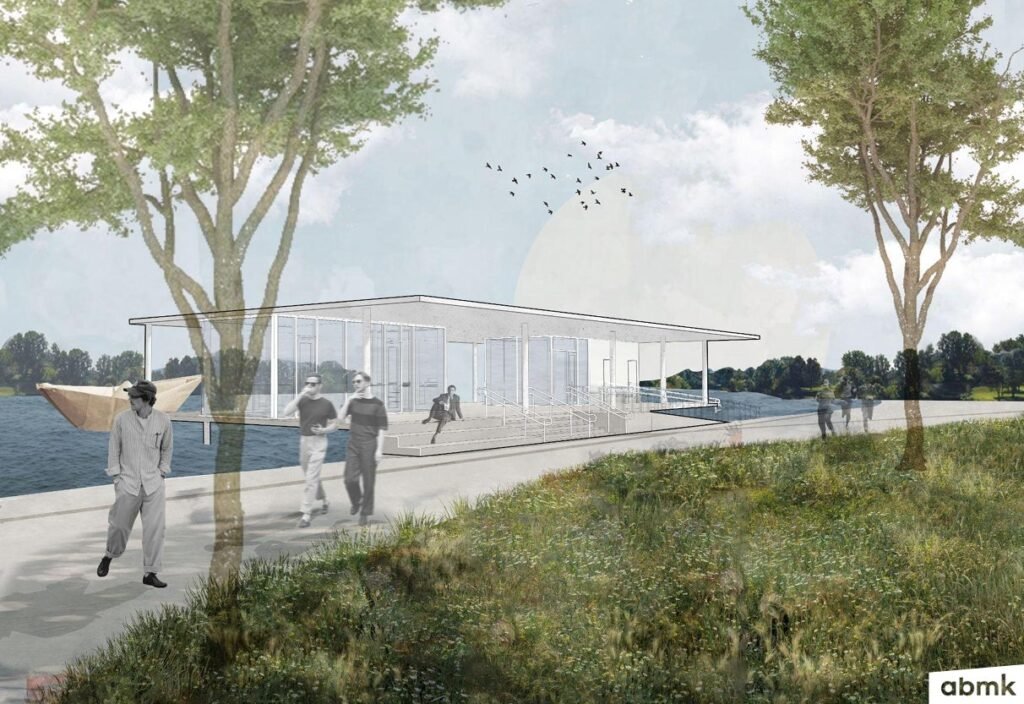
Waterfront pavilion
Stairs and an elevator next to a historic building
02Why it matters

Ukraine is changing — and communities must change with it.

Millions of Ukrainians are already living with new experiences — injuries, changed mobility, forced displacement, the return to civilian life after the front line. This is not a temporary condition that will pass. It is a new demographic reality the country will live with for many years to come.

In this reality, accessibility is no longer a social issue “for a particular group.” It becomes a precondition for whether a person can move around independently, work, get medical care, rest, and be part of their city.

Key point

The question is no longer how an individual will adapt to an old environment. The question is whether communities are ready to adapt to a new reality.

2 million
veterans
data: 2026source ↗
3.4+ million
people with disabilities
data: 2026source ↗
≈3.45 million
IDPs
data: 2026source ↗
03The main barrier

Fragmented accessibility

An accessible entrance doesn’t work without an accessible sidewalk.

An adapted restroom solves nothing if no one can get to it.

Today, accessibility often exists as a set of separate fixes. Even with the best intentions, communities can’t get quality results without responsible design, qualified professionals, and a holistic view of a person’s route. One inaccessible link breaks the entire journey.

Separate fixes

[RE]MEMBERS connects separate fixes into a holistic mechanism of change

The holistic [RE]MEMBERS system
83%

of Ukrainians surveyed already see a barrier-free environment as a new value for society. Now it has to become more than a belief — it has to become everyday practice in Ukrainian communities.

Source
04Our solution — 4 pillars

A model for the next-generation barrier-free community

[RE]MEMBERS is a workshop for rebuilding connections. We work with space, people, skills, and social norms at the same time. Only by combining these four levels can we move from isolated inclusive fixes to an environment where respect unites equals.

We create a holistic accessible environment where routes, spaces, institutions, and services work as a single system.

Space

We grow a community of active people who don’t just watch change happen — they define needs, create solutions, and lead development where they live.

Community

We train those who design, manage, build, and deliver services, turning pilot experience into practical tools and methodologies so that accessibility becomes the standard and change lasts.

Knowledge

We shape a culture where memory gains strength through action, accessibility becomes a non-negotiable norm for everyone, and responsibility becomes the shared foundation of community life.

Culture
05Pillar 1

Space

One of the key pillars of [RE]MEMBERS is transforming the physical environment of communities according to the principles of universal design, human-centeredness, and a comprehensive approach.

We work with a person’s entire journey — from city routes, wayfinding, and entrances to access to services, recreation, and public spaces.

To us, accessibility means that every element of the environment is connected, so people can use the city independently, safely, and with dignity, and take an active part in community life.

Poster for the “Accessible Ternopil” event: panel discussion on October 11 at 4 p.m.
Route
Wayfinding
Entrance
Services
Recreation
Project 1 · Ternopil

A space of equal opportunities for all

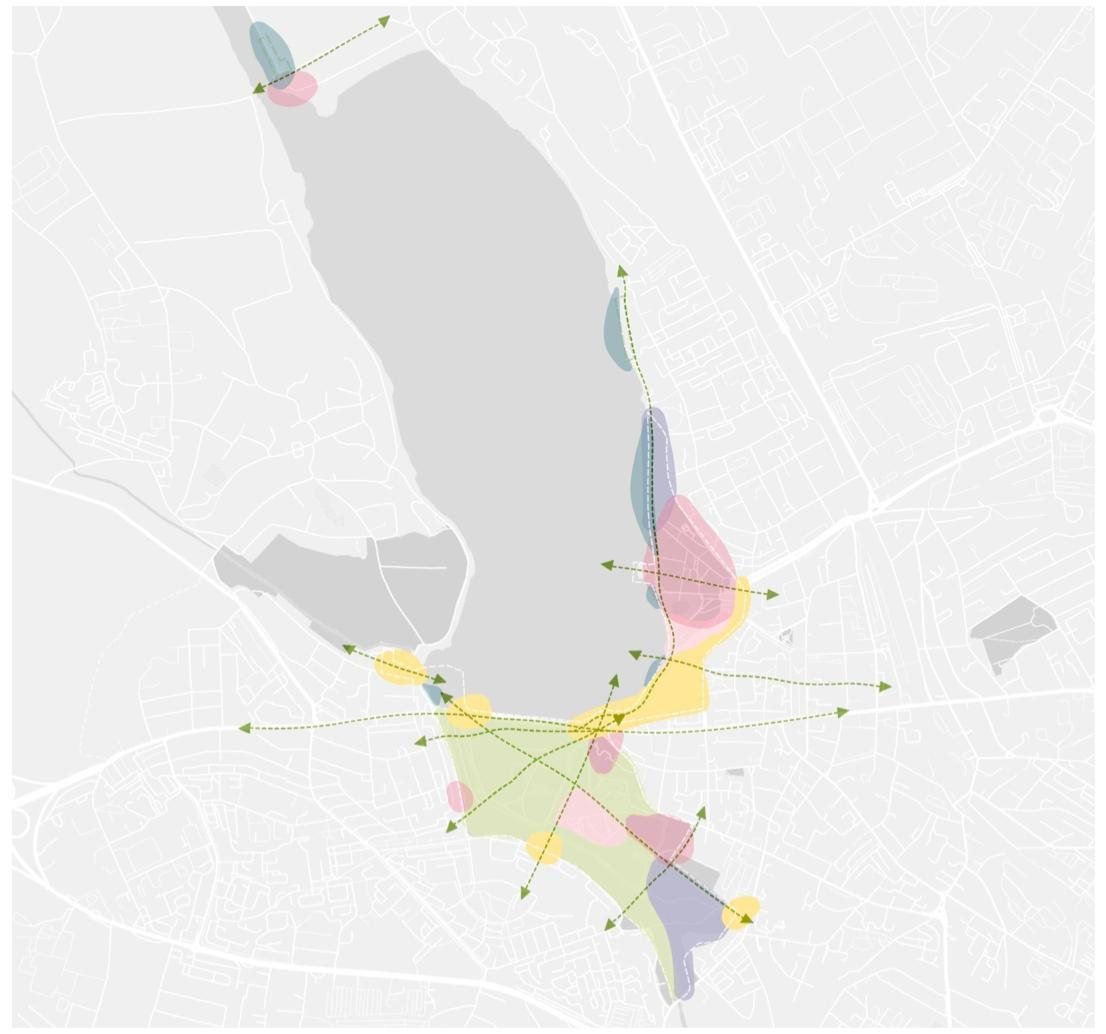
Ternopil is the first large-scale urban pilot of [RE]MEMBERS, where we are testing how universal design can work as a holistic system for the whole urban environment.

The project covers central routes, public and recreational spaces, Sopilche Park, access to the water, public restrooms, hotels, adaptive sports, and digital solutions.

Implementing the project helps us spot weak points in how accessibility is delivered, refine the way the city, professionals, businesses, and residents work together, and shape an algorithm for comprehensive transformation in the communities that come next.

Ternopil is meant to prove that a holistic transformation of the urban environment is possible — and to give other communities not just an example, but a clear path to replicating it.

How our model works

01

Environment audit

We audit accessibility in the defined project area and record the main barriers.

02

Community and city dialogue

We meet with local government, residents, and key users of the space to identify additional challenges and needs.

03

Context research and zoning

We analyze the historical, spatial, and functional context of the area and develop functional and spatial zoning.

04

Comprehensive transformation concept

We develop a holistic vision for adapting the area according to universal design principles.

05

Identifying priority sites

We identify the sites and facilities where intervention will have the greatest impact and must come first.

06

Professional review of the vision

We validate the concept with the professional community, specialists, and local government.

07

Design documentation and delivery

We set the sequence for transforming the area, develop working design documentation for the first phase, and move on to implementation.

08

Testing and capturing lessons

We test the implemented solutions with users, record weak points, and update the algorithm for the next communities.

Phase 1

Sopilche Park

One of Ternopil’s key recreational spaces, linking central parts of the city and opening onto Ternopil Pond.

The first phase includes an accessible entrance and a key route designed according to universal design principles. Sopilche is meant to become not just an accessible park, but a place of memory, rest, and togetherness, integrated into the city’s wider barrier-free route.

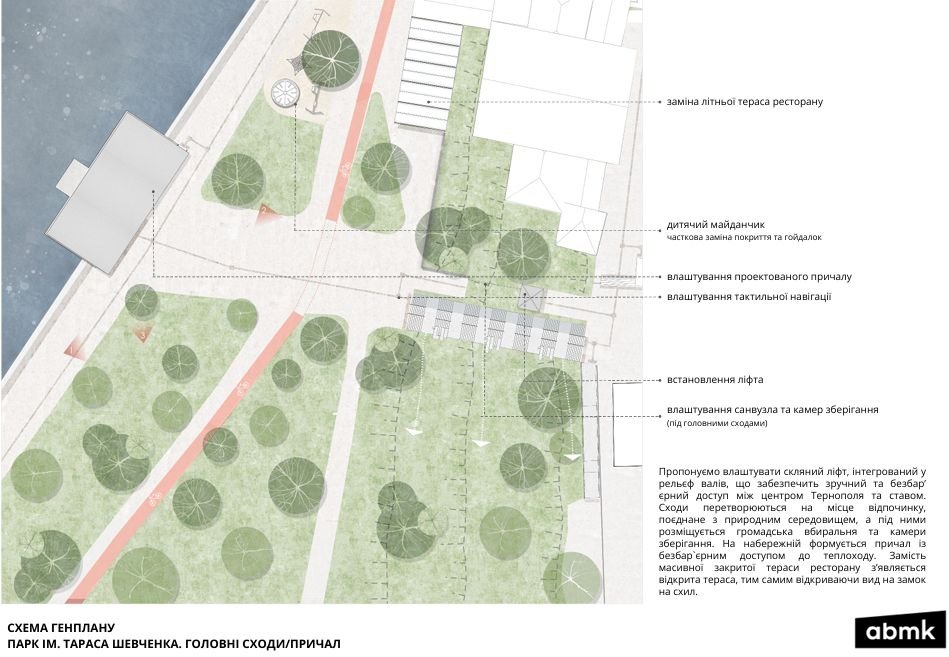
The comprehensive project identified the key intervention zones needed to create a continuous accessible route around Ternopil Pond:

Central waterfront access — redesigning the stairs and installing an elevator for people with limited mobility.

Central waterfront access — concept rendering 1
Central waterfront access — concept rendering 2
Central waterfront access — concept rendering 3
Central waterfront access — concept rendering 4
Central waterfront access — concept rendering 5

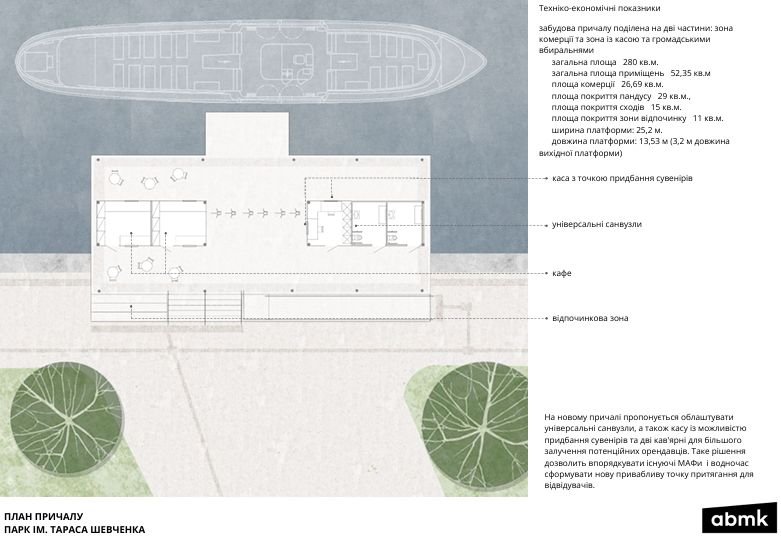
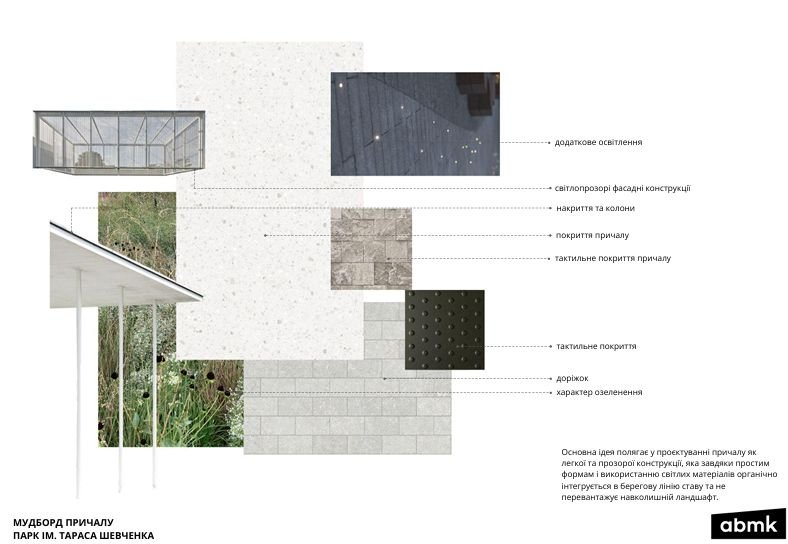
Accessible pier — safe access to water transport.

Accessible pier — concept rendering 1
Accessible pier — concept rendering 2
Accessible pier — concept rendering 3

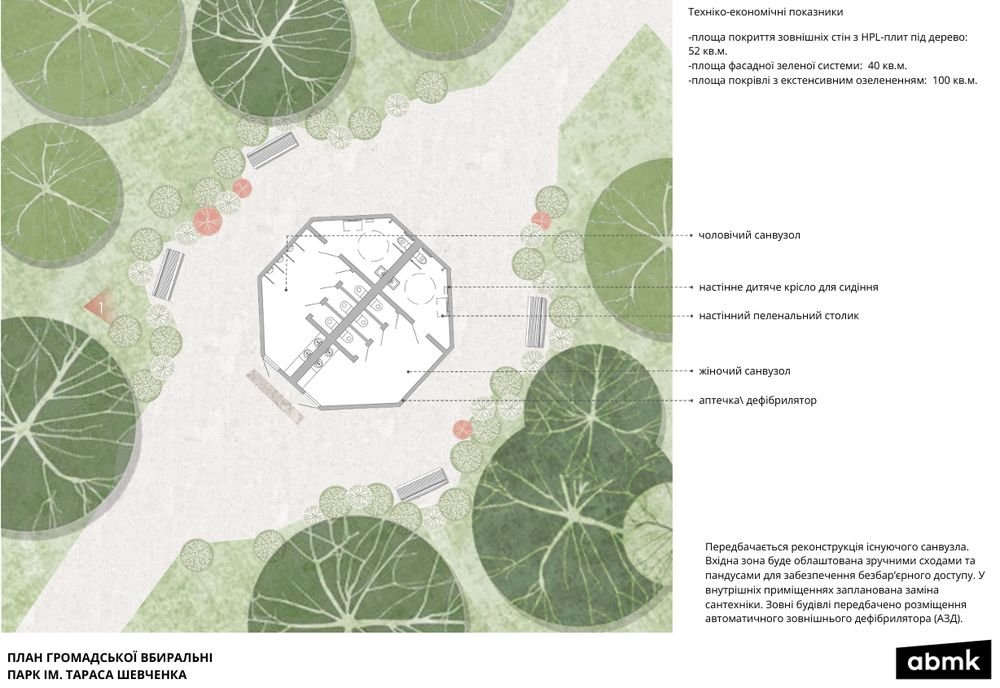
Accessible restrooms — at key points in the recreation area.

Accessible restroom — concept rendering 1
Accessible restroom — concept rendering 2
Accessible restroom — concept rendering 3
Accessible restroom — concept rendering 4

Adaptive sports and water recreation — accessible zones for active leisure.

Adaptive sports and water recreation — concept rendering 1
Adaptive sports and water recreation — concept rendering 2
Adaptive sports and water recreation — concept rendering 3
Adaptive sports and water recreation — concept rendering 4

Inclusive playgrounds — spaces where children and families spend time together.

Inclusive playground — concept rendering 1
Inclusive playground — concept rendering 2
Inclusive playground — concept rendering 3
Inclusive playground — concept rendering 4
Inclusive playground — concept rendering 5

Together, these solutions create a continuous accessible route from the city center to the water, recreation, and active leisure.

As we create an accessible environment in central Ternopil, we are also bringing local businesses into the change. In partnership with hotels in the city center, we are developing a barrier-free conference hub where people with different needs can stay, work, learn, attend events, and relax on equal terms.

1
hotel floor fully adapted to universal design principles
2
new accessible elevators
4
rooms adapted for wheelchair users
7
rooms designed with different needs in mind
Third-floor plan of the conference hub with a room schedule: restaurant, conference rooms, lounge area, terraces, universal cubicle, and accessible restrooms

The next phase is a conference space for training, forums, and public events, integrated with accessible accommodation and recreation infrastructure. Design documentation for the conference hub is currently being developed.

Project 2 · Libraries for All

“Libraries for All”

A library is one of the most democratic public spaces in a community. It can be a place to learn, work, socialize, find support, take part in culture, attend events, and simply spend quiet time.

“Libraries for All” is a national initiative to rethink and transform Ukraine’s public libraries into modern, accessible, multifunctional community spaces. It builds universal design principles into the library’s physical, service, and organizational model, so the institution can respond to the real needs of people and their communities.

The Rohatyn and Bilohiria central libraries are the pilot sites. Through them, we aim to create a replicable model for transforming a public institution — one that can later be adapted and scaled in other communities across Ukraine.

Transforming a library, then, is not just about refreshing a space. It means rethinking the very function of a public institution and its role in community life.

That is why [RE]MEMBERS, in partnership with the NGO PRO PM PROSVITA FUND and the Ministry of Culture of Ukraine, and with support from the Ukraine-Moldova American Enterprise Fund, launched the “Libraries for All” pilot program.

Through this project, we are testing how the [RE]MEMBERS approach can work not only at the scale of city infrastructure, but also at the level of a single public institution. A library can become an accessible “third place” — somewhere to meet, learn, work, socialize, and take part together, for people of any age, background, or level of mobility.

Rohatyn Central Library

Rohatyn Central Library

Public library→an accessible community space
Bilohiria Central Library

Bilohiria Central Library

Book collection→a multifunctional third place

5 spatial elements — usage scenarios

Quiet zone

A space for focused reading and work, accessible to people with different sensory and physical needs.

06Pillar 2 — Community

Community

We build a community of active people who don’t just watch change happen, but become its authors.

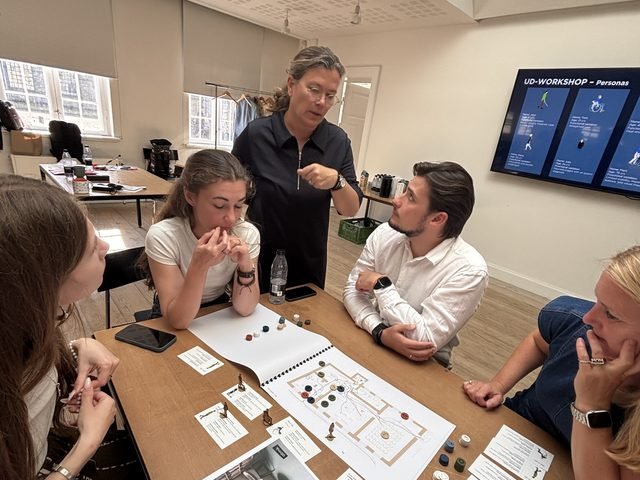
For [RE]MEMBERS, the point is not to bring ready-made solutions into a community, but to create them together with the people who use the city, its spaces, and its services every day.

Residents know best where a route breaks off, which opportunities are missing, and which changes will truly improve quality of life. That is why veterans, people with disabilities, families with children, local businesses, and other residents are not recipients of change for us — they are co-authors of solutions and partners in developing their community.

We involve residents before a solution is designed: together we identify barriers, priorities, and scenarios for using a space, test the proposed solutions, and revisit them after implementation.

The goal is for residents to see themselves not as an audience for change, but as its co-authors.

Accessibility map

A dedicated tool will be an accessibility map, where any resident can mark a barrier in their neighborhood, flag a problem, or suggest a change. It gives people a real way to shape the environment around them.

A community is shaped not only by solutions, but by the experiences people share. Sports, leisure, events, and joint activities create new connections and give people back an active role in community life.

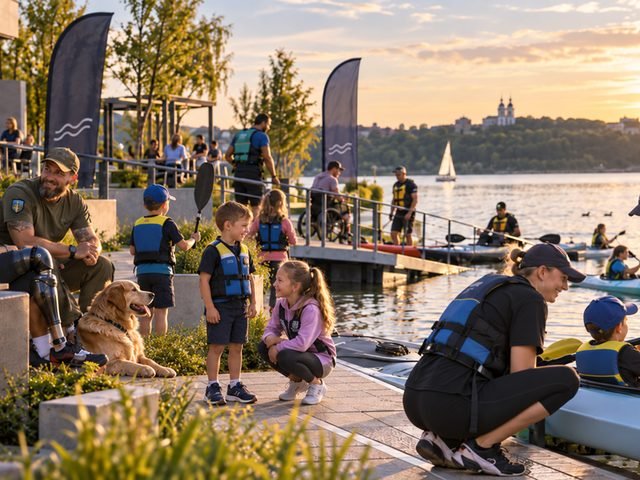
A special focus of [RE]MEMBERS is adaptive sports, open to people of all mobility levels — veterans, children, adults, and families. For us, it is not only a tool for physical recovery, but also a chance to socialize, meet new people, and build confidence and leadership.

In Ternopil
Access to the water Adaptive water sports Accessible recreation infrastructure Ternopil Pond

Economic independence is one of the strongest ways a person can take part in community life.

Business as an agent of change

Local businesses create the jobs, services, and spaces people use every day. That is why [RE]MEMBERS involves entrepreneurs in setting the community’s agenda for change, in finding solutions together, and in building a culture of accessibility. We want accessibility to become not a separate requirement, but part of everyday business culture.

Veteran entrepreneurship

For many veterans, returning to civilian life means starting a new professional chapter. Entrepreneurship can become a path to economic independence, self-fulfillment, and a new kind of influence on how their community develops. [RE]MEMBERS plans to combine mentorship, the experience of established entrepreneurs, a partner network, and access to knowledge, resources, and financing to create an environment where veteran-owned businesses can grow.

A strong community is not one for which someone else creates change. It is a community where people can influence, act, bring others together, and take responsibility for a shared future.

What research shows

Research by the Ukrainian Veterans Fund shows that a significant share of veterans are interested in entrepreneurship. A 2025 study identifies needs not only for material and medical support, but also for psychological, housing, and social support. That is why we speak the language of opportunity, participation, and independence — not the language of “aid.”

Source: Ukrainian Veterans Fund

07Pillar 3 — Knowledge

Knowledge

We cannot transform every Ukrainian community on our own. That is why the main long-term outcome of [RE]MEMBERS is people and institutions with the knowledge, tools, and capacity to carry the change forward themselves.

We turn the experience of our pilots into training programs, methodologies, practical checklists, case guides, and a network of trained professionals who can apply and scale this approach in their own communities.

Pilot LibrariesTernopil Trainingbuilding the methodology New communityreplicating the model

Methodology and White Paper

Every [RE]MEMBERS pilot should leave behind not only a transformed space, but knowledge that others can use. Drawing on the experience of Ternopil and the “Libraries for All” program, we plan to develop a practical transformation methodology covering audit, co-creation, prioritization, design, implementation, and evaluation. Further outcomes will include a practical guide to applying universal design principles and a White Paper with findings and recommendations for communities, public institutions, and public policy. Our goal is to turn the experience of individual pilots into a replicable model that communities across Ukraine can use.

Transformation methodology Practical guide White Paper
08Pillar 4 — Culture

Change lasts only when it becomes part of the culture.

New norms don’t emerge from standards, infrastructure, or individual projects alone. They take hold when society’s attitude toward people, shared spaces, and its own responsibility changes.

[RE]MEMBERS works across three interconnected areas of cultural change.

Culture of memory

Memory → Action

Memory gains strength when it turns into action. For us, memory is not only about honoring the past, but also about taking responsibility for what the country becomes in the future — including for the people who defended it.

We strive to create spaces where memory stays alive — through everyday life, encounters, connections between generations, and care for people. Sopilche Park is meant to become one example of this approach.

Culture of accessibility

Accessibility → Norm

Accessibility is not a special option for certain people. It is the standard of a quality environment for everyone. Being barrier-free should be a natural feature of the city, services, work, culture, information, and everyday interaction.

When spaces and services account for different life scenarios from the start, they are easier for everyone to use.

Culture of responsibility

Responsibility → Practice

A community is not the audience for change. A community is its author. Equal opportunities cannot be created by a single organization or municipality alone. The city, businesses, professionals, institutions, and residents themselves all share responsibility.

[RE]MEMBERS brings these players together around collective action and helps turn responsibility from a declaration into everyday practice.

Pillar in brief

We turn memory into action, accessibility into the norm, and responsibility into the community’s shared practice.

09Partners

Equal opportunities come only from collective action

[RE]MEMBERS is built as a cross-sector coalition in which every participant has a role in transforming the community.

[RE]
MEMBERS
coalition
Communities
Experts
Business
Civil society
Donors and
international partners
Government

Communities

Communities provide local leadership and the capacity to make change happen.

Experts

Experts ensure high-quality solutions and professional know-how.

Business

Businesses transform private spaces, create jobs, and co-invest in change.

Civil society

Civil society engages people and brings trust and hands-on experience.

Donors and international partners

Donors and international partners provide resources, knowledge, and the chance to test new approaches.

Government

Government helps turn proven practices into systemic solutions and standards.

Program partners

Partner

Architecture firms

Local partner

Partner businesses

10Get involved

Everyone has their own way to be part of the change.

Your role in the change.

Community

  • Nominate your community for the next [RE]MEMBERS stage
  • Complete an initial readiness assessment
  • Enroll your community team in training

Business

  • Adapt your own space
  • Take accessibility training
  • Share your expertise
  • Support a specific project component

Donor / international partner

  • Support infrastructure and education projects
  • Contribute to developing the methodology
  • Support international exchange and scaling

Architect / expert

  • Join our training programs
  • Work on pilot projects
  • Take part in co-design and knowledge exchange

Government agency

  • Help integrate proven practices into policies, standards, programs, and regulations
11Contact

Only collective action creates equal opportunities for all.

RE:Member about the future.

Address

10 Lesi Ukrainky Ave, Kyiv, 01133, Ukraine